The BOL™ Model
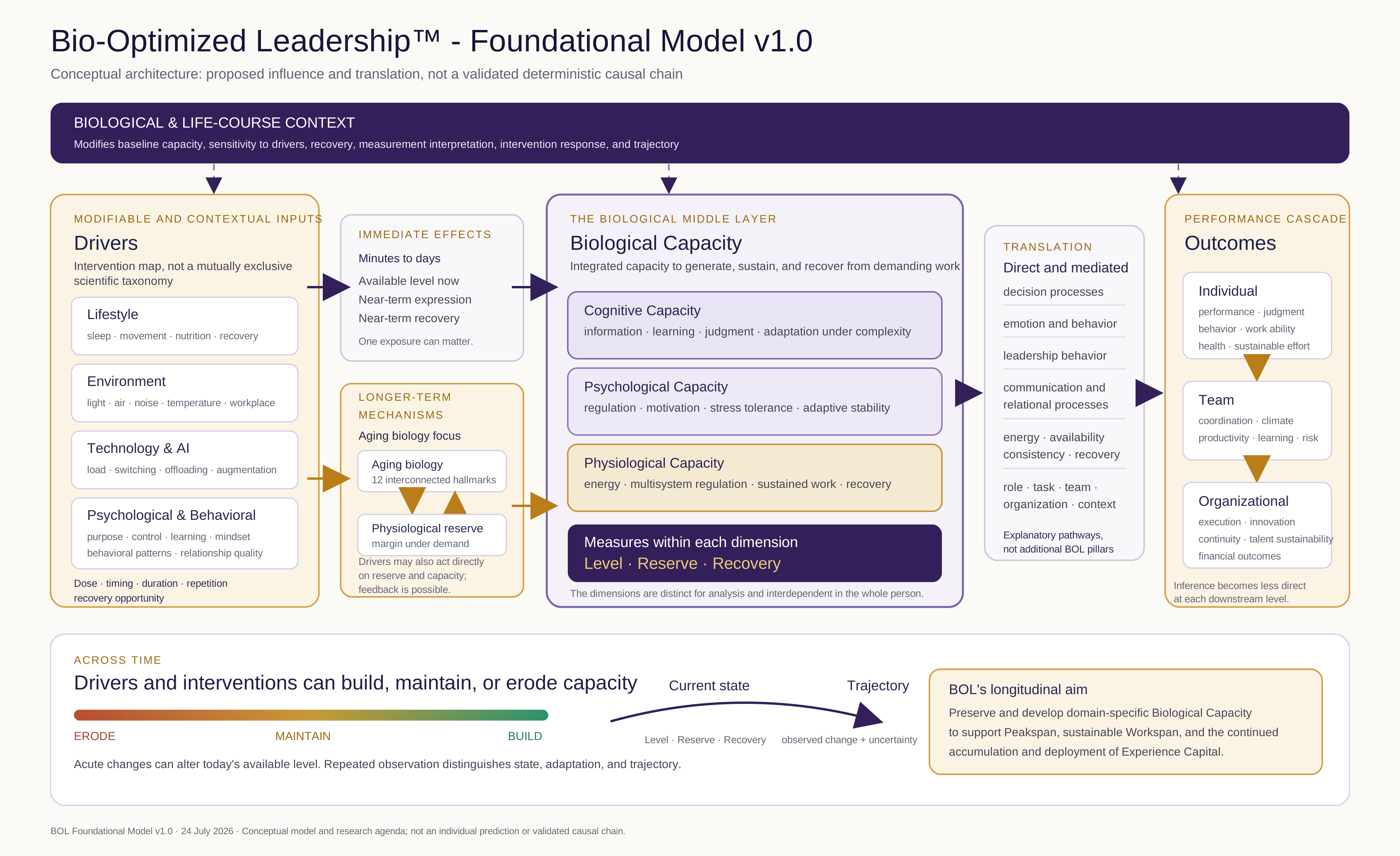
Drivers → Biological Capacity → Outcomes
Bio-Optimized Leadership™ treats the Biological Capacity available to leaders as a modifiable input to sustained judgment, behavior, adaptation, and performance in demanding environments.
Core definitions
Two Definitions Worth Reading Twice
Bio-Optimized Leader™
A Bio-Optimized Leader is one who recognizes that leadership capacity is biologically mediated - and who therefore intentionally develops the physiological, cognitive, and psychological capacities, and the environment that shapes them, needed to sustain clear judgment, adaptive thinking, and resilient performance for themselves, their team, and their organization.
Biological Capacity
Biological Capacity is the integrated cognitive, psychological, and physiological capacity a person can draw on to generate, sustain, and recover from demanding work over time.
4 Drivers, 2 Timescales
What Shapes Biological Capacity
Four categories of driver can support, strain, build, maintain, or erode capacity. Immediate effects may alter today's available level. Accumulated exposures may influence aging biology, physiological reserve, and longer-term capacity trajectories.
Lifestyle
Sleep, physical activity, nutrition, recovery practices, substance exposure, and related patterns.
Environment
Light and circadian conditions, air, noise, temperature, nature, travel, workplace design, and social environment.
Technology & AI
Information load, interruption and switching, cognitive offloading or augmentation, decision cadence, surveillance, and recovery-boundary effects.
Psychological & Behavioral
Purpose, perceived control, learning, mindset, behavioral patterns, and relationship quality.
Direction isn't fixed. AI augments or offloads. Exercise builds or overtrains. Sleep restores - or, when short, erodes. Every driver can move from erode to build. That movement is the intervention.
3 Sub-Capacities. 1 Coupled System
Biological Capacity, Defined
Biological Capacity integrates three interdependent dimensions, each examined through Level · Reserve · Recovery. Level describes available capacity under defined conditions. Reserve is the additional capacity revealed under challenge. Recovery is the return toward a reference state after demand.
Cognitive Capacity
Information processing, attention, learning, memory, executive control, judgment, and adaptation under complexity.
Psychological Capacity
Regulation, motivation, stress tolerance, psychological flexibility, and adaptive stability.
Physiological Capacity
Energy availability, multisystem regulation, physical function, sustained work, and recovery.
The Engine
Why It Works, Mechanistically
The longer-term research layer links repeated driver exposure to aging biology and physiological reserve. These layers are reciprocal and do not form the only route into capacity. Drivers may also affect reserve and capacity directly, and feedback is possible.
The Measurement & Intervention Layer
How A Driver Actually Moves From Erode To Build
Measurement should match the dimension and property being examined. Biological-age measures sit primarily within Physiological Capacity and do not represent the whole construct. Reserve and recovery normally require dynamic or repeated observation. In delivery, this logic informs the Executive Pilot's Measure → Translate → Intervene → Measure cycle. See the services
The Outcomes Cascade
From Biology To The P&L
Biological Capacity may influence outcomes through cognitive performance, emotion and behavior regulation, leadership behavior, communication and interpersonal effects, energy and availability, consistency, recovery, role design, and organizational conditions. The farther an outcome sits from an individual capacity measure, the more mediators, moderators, time lags, context, and alternative explanations must be expected.
What Distinguishes BOL™
What the model makes explicit
Adds an upstream input
BOL makes the Biological Capacity available to the leader explicit without reducing leadership performance to biology.
Separates state from resilience
Each capacity dimension is examined through Level, Reserve, and Recovery. Reserve and recovery normally require repeated or challenge-based observation.
Makes claim boundaries visible
Established evidence, BOL interpretation, hypotheses, and future research propositions are kept distinct.
Why Peakspan Matters
The 2 Curves
Peakspan is domain-specific. Different physiological functions and cognitive abilities reach and leave their peaks at different ages, with substantial individual variation.
Experience Capital may continue accumulating across a career. BOL proposes that Biological Capacity may affect both its continued accumulation and how reliably it can be deployed under current demand.
Put simply: Experience Capital is what experience builds; Biological Capacity is what lets a leader use it. The interaction, and the proposition that preserving capacity can support Peakspan and longer Workspan, remain hypotheses until tested.
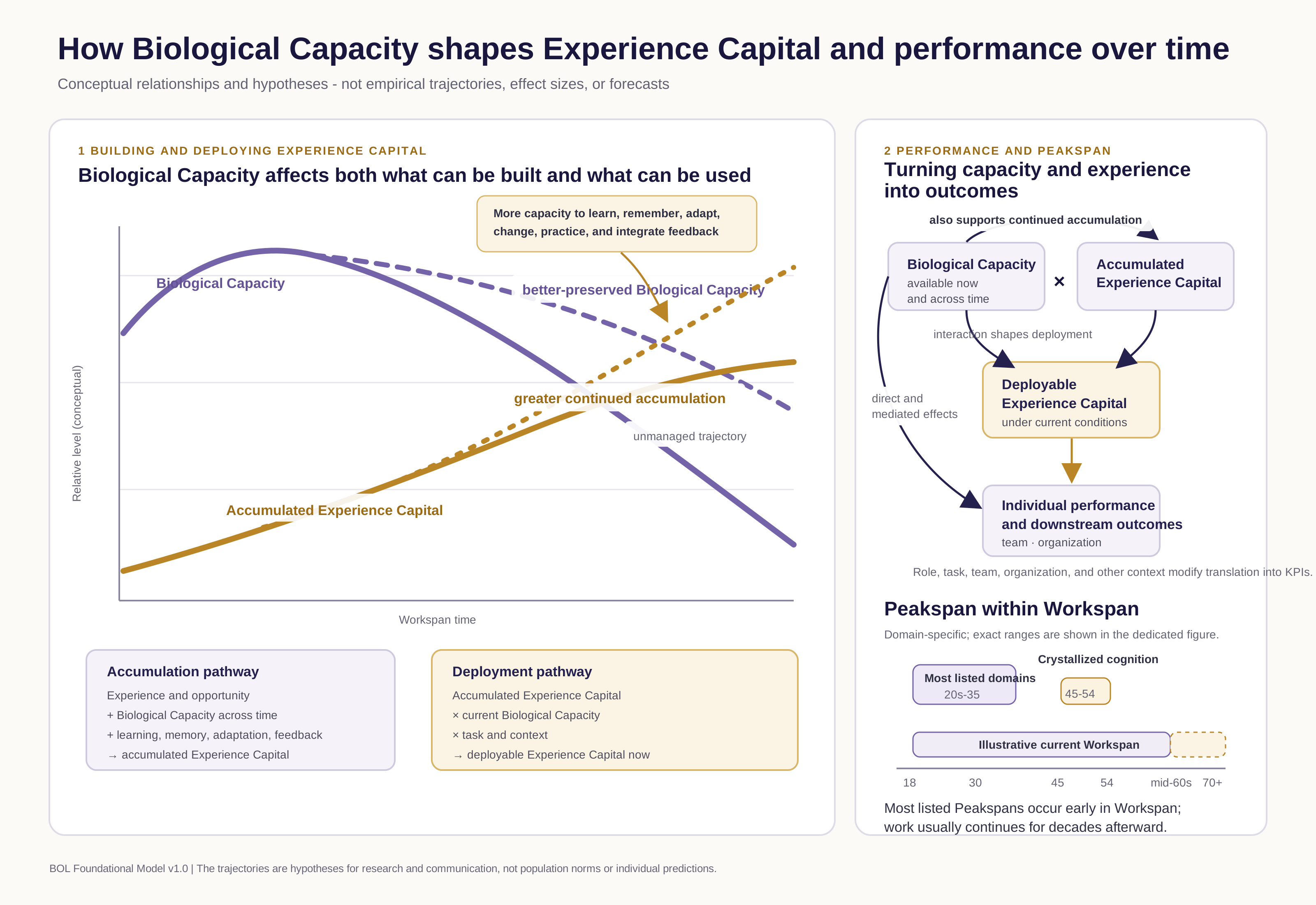
Peakspan is the time during which a defined function remains at or above 90% of its peak functional performance. It must be measured separately by domain and is not one universal age curve.
Provenance
The Receipts Nobody Can Copy
17 May 2022
The model exists in full, originally named Vibrant Leadership.
30 April 2024
First documented use of the name "Bio-Optimized Leadership."
19 November 2024
First documented use of the ™ designation.
8 April 2025
Organizational outcomes expanded.
12 August 2025
Biooptimizedleadership.com registered (third-party-timestamped).
2025 → 2026
The biological-capacity framework formalized in research memoranda.
The intellectual foundation goes back further - to Ines O'Donovan's doctoral research in leadership (Lancaster University, 2012), which Bio-Optimized Leadership™ extends to the biological determinants of leadership performance.
How to cite this work
Built To Be Citable
O'Donovan, I. (2026). Bio-Optimized Leadership™: A foundational model of Biological Capacity, leadership performance, and outcomes across longer working lives (Foundational Whitepaper, Version 1.0). Bio-Optimized Leadership. https://doi.org/10.5281/zenodo.21538567
View the canonical DOI recordFAQ
The Model, Questioned
Read the Foundational Whitepaper
Version 1.0 sets out the complete architecture, scientific lineages, evidence boundaries, Workspan propositions, and validation agenda. It is free to download, with no email required.